
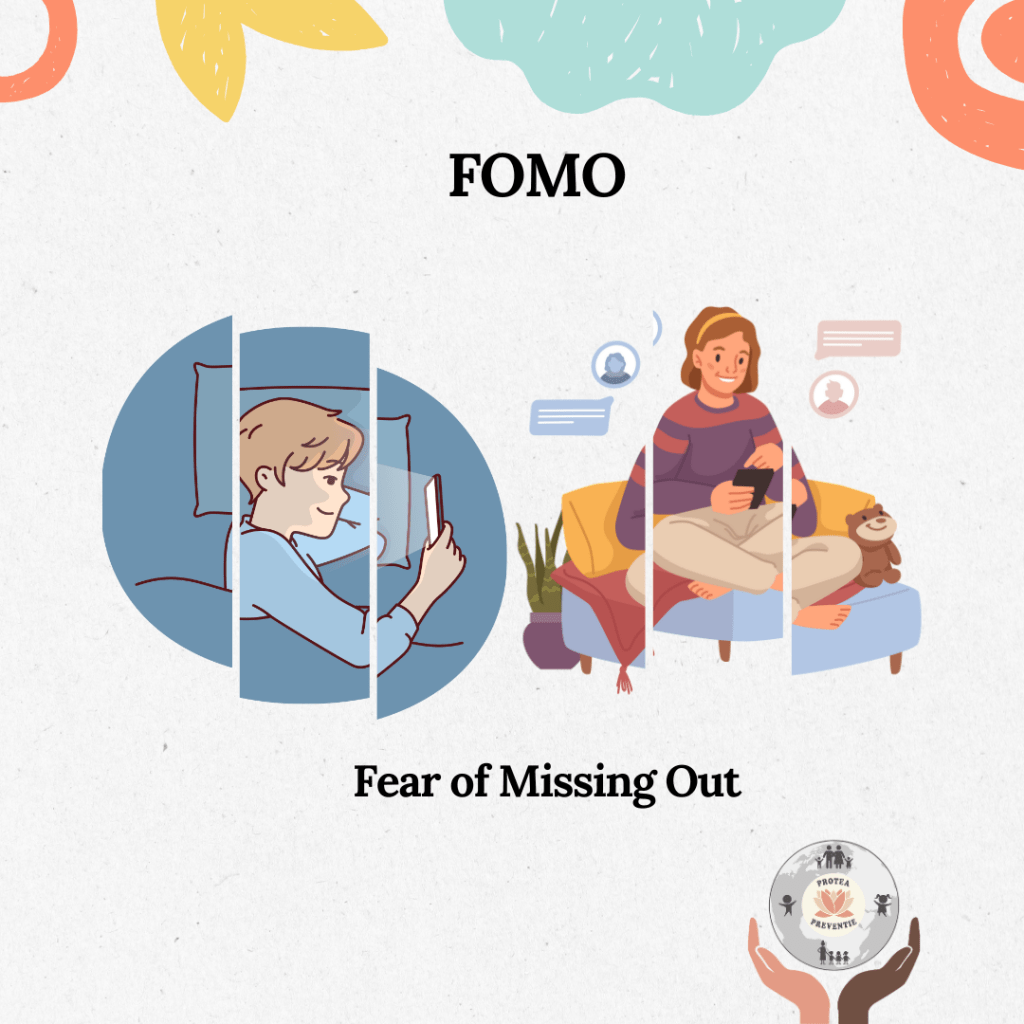
The digital age is our new reality; the Fear of Missing Out (FOMO) is more than just a trendy term – it’s a genuine and growing concern, especially for youth navigating the complexities of social media. As a social worker in preventive youth care and youth at risk (0-18), I have seen the impact how FOMO impacts mental health, academic performance, achievement, and overall well-being. We’ll explore FOMO, why it is so common among teens, and how parents, teachers, and young people can work together to minimize and mitigate its effects.
Understanding FOMO in the Social Media Age
FOMO refers to the anxiety that others are having rewarding experiences from which one is absent. Social media platforms thrive on this concept, using tactics like real-time notifications, disappearing posts, and engagement-based algorithms to keep users hooked. The result? is a constant checking, comparison, and stress circle.
Who is Most at Risk? While FOMO can affect anyone, it is most common among:
- children, teens, and young adults
- individuals who frequently compare themselves to others
- those who feel a strong need for social validation
Studies show that over half of social media users experience FOMO, with the numbers increasing among teens. It is a global phenomenon, impacting youth in the U.S.A., Poland, Italy, and beyond.
How Social Media Fuels FOMO
Social media makes people feel they must always stay connected or risk missing out on something important. Some common triggers include:
- Missing out on social events: Seeing friends post about hangouts or trips with others.
- Being left out of group chats or discussions: Feeling ignored when not tagged in a post.
- Fear of losing status or influence: Worrying about likes, comments, and follower counts.
- Snapchat Streaks & Disappearing Posts: Platforms intentionally create urgency, making users feel they must check in constantly.
The result? Teens are stuck in a vicious cycle of checking, comparing, and feeling inadequate. It may lead to anxiety, lack of focus, sleep disturbances, and risk of depression.
What Parents & Teachers Can Do:
1. Foster Open Conversations: Encourage teens to openly “chat” (discuss) their social media experiences. Instead of banning platforms outright, help them understand how social media affects
2. Set Healthy Boundaries: The American Academy of Pediatrics recommends:
- Keeping screens out of bedrooms
- Avoiding screens during meals
- Limiting entertainment screen time to two hours per day
- Monitoring content to ensure age-appropriateness
3. Encourage Offline Activities: Help teens engage via communication, socializing, hobbies, and sports. The more fulfilling their offline lives are, the less they’ll rely on social media for validation.
4. Teach Critical Thinking: Many social media posts are curated content to appear “perfect.” Remind teens that what they see online isn’t always reality. Help them recognize the difference between authentic and manipulated content.
What Teens Can Do to Overcome FOMO
If you’re struggling with FOMO, here are some self-help strategies:
- Use self-talk: Remind yourself that missing out online doesn’t mean missing out on life.
- Manage expectations: “Not everything exciting happens online; real life matters more.”
- Turn off unnecessary notifications: Reduce digital distractions and focus on being present.
- Prioritize real-life connections: Spend time with family and friends without the pressure of posting.
- Think before posting: Ask yourself: “Am I posting for myself or for validation?”
- Take digital breaks: “Try going offline for a few hours or even a day to reset your perspective.”
 Protea Preventie
Leave a comment