
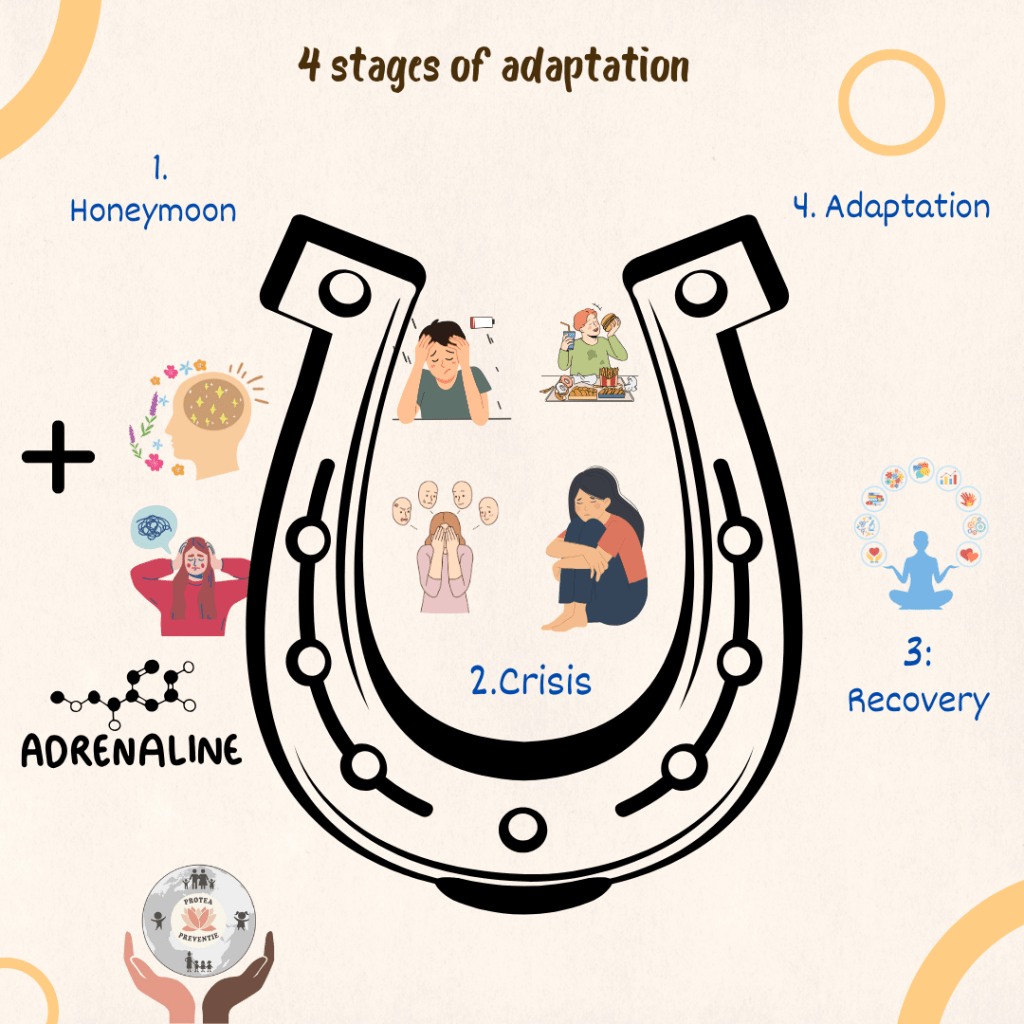
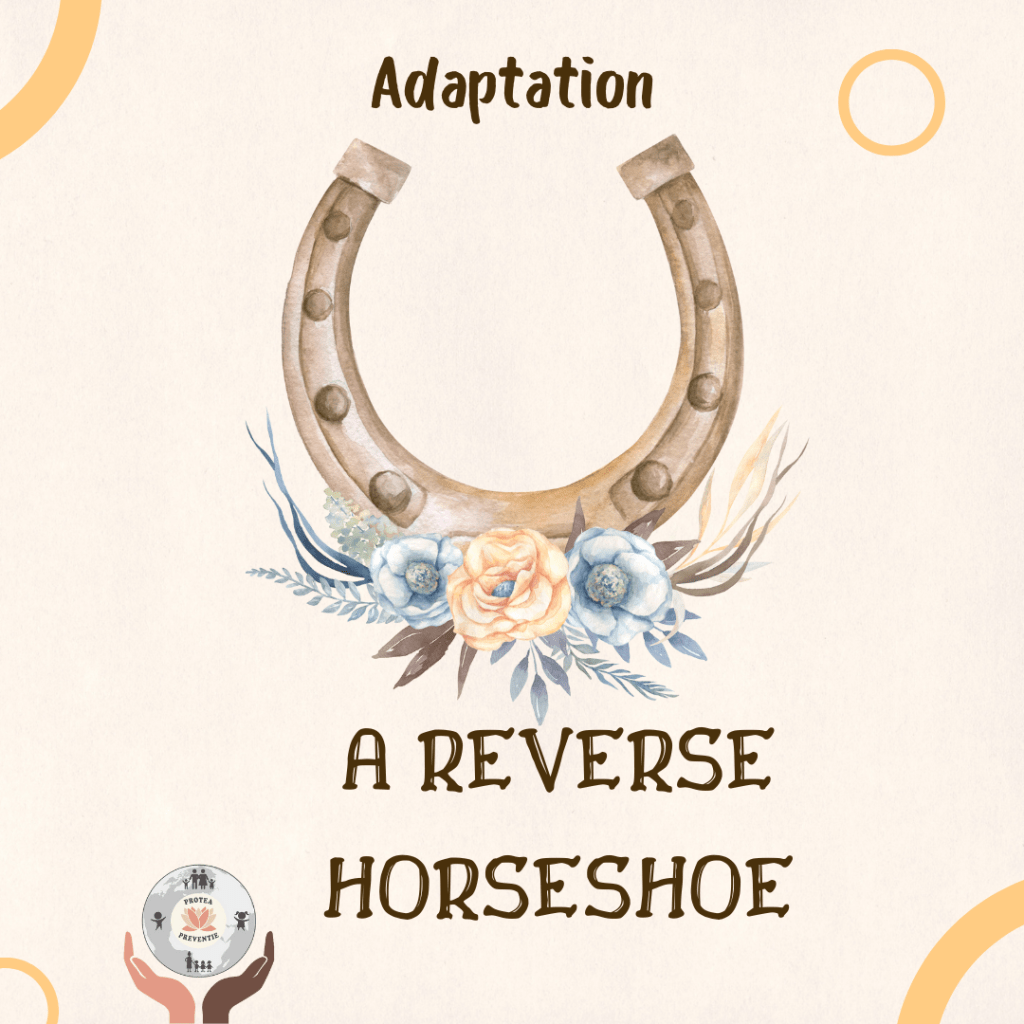
Changes often occur in our lives. They can be small adjustments or even major transformations, such as the beginning of a new school year, moving to a foreign country, the birth of a child, or the loss of a loved one. For me, adaptation resembles a reverse horseshoe’ , which brings luck to many cultures and involves four stages: the “honeymoon,” the “crisis,” the “recovery,” and the final “adaptation”. These stages emerge with every change we experience, with every significant decision we make, and with every environmental shift, such as transitioning to a new country or returning to our homeland, starting at a new school, or entering a new school year.
Stage 1: Honeymoon – The Initial Moments of Change
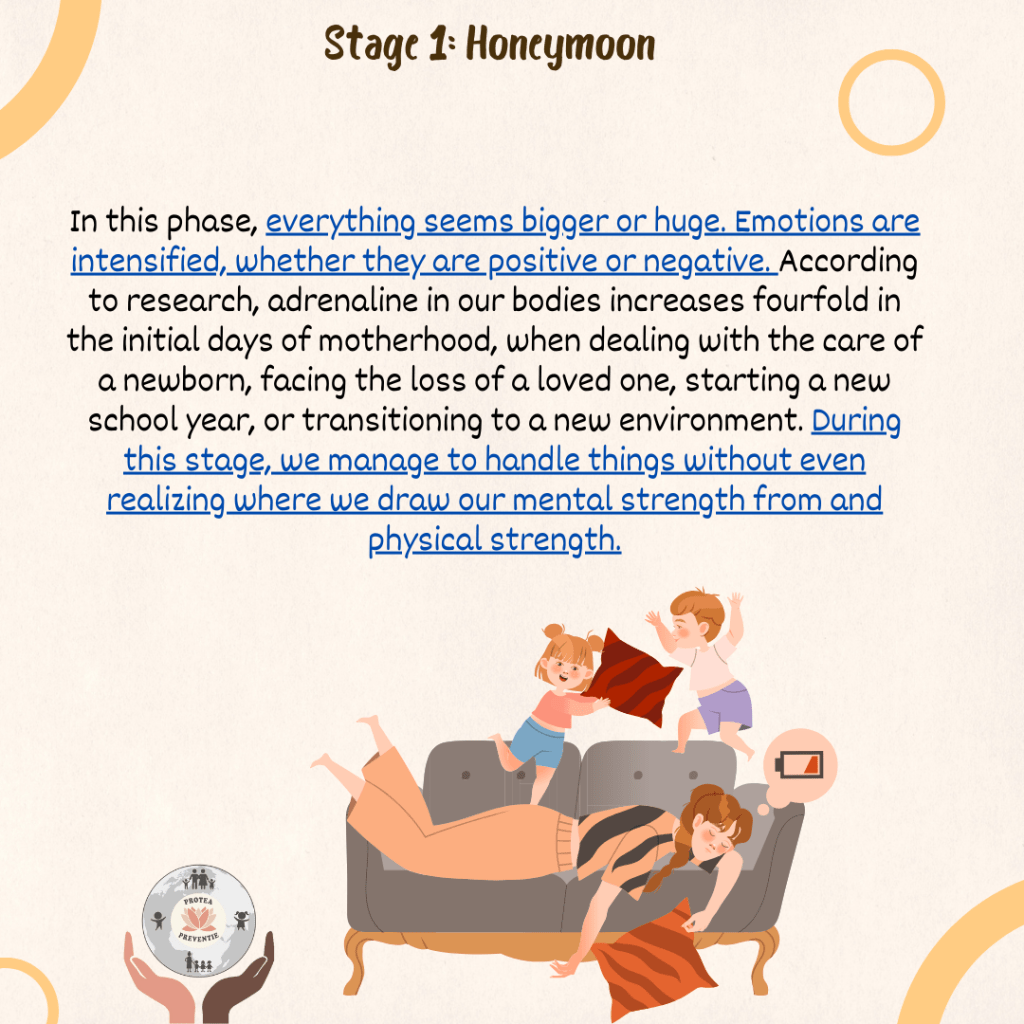
In this phase, everything seems bigger or huge. Emotions are intensified, whether they are positive or negative. According to research, adrenaline in our bodies increases fourfold in the initial days of motherhood, when dealing with the care of a newborn, facing the loss of a loved one, starting a new school year, or transitioning to a new environment. During this stage, we manage to handle things without even realizing where we draw our mental strength from and physical strength.
Stage 2: Crisis – The Shock of Change
This is followed by the “crisis” stage, where we encounter a shock. Anxiety, feelings of surprise, disorientation and confusion are common. Our environment appears entirely different, and difficulties arise when adapting to it. Comparisons with the old environment may affect our mood over time. This stage depends on our self-awareness, the time we have spent in the new environment or change, and how integrated we are into it.
Stage 3: Recovery – Rejuvenation and Unveiling of the Human Element
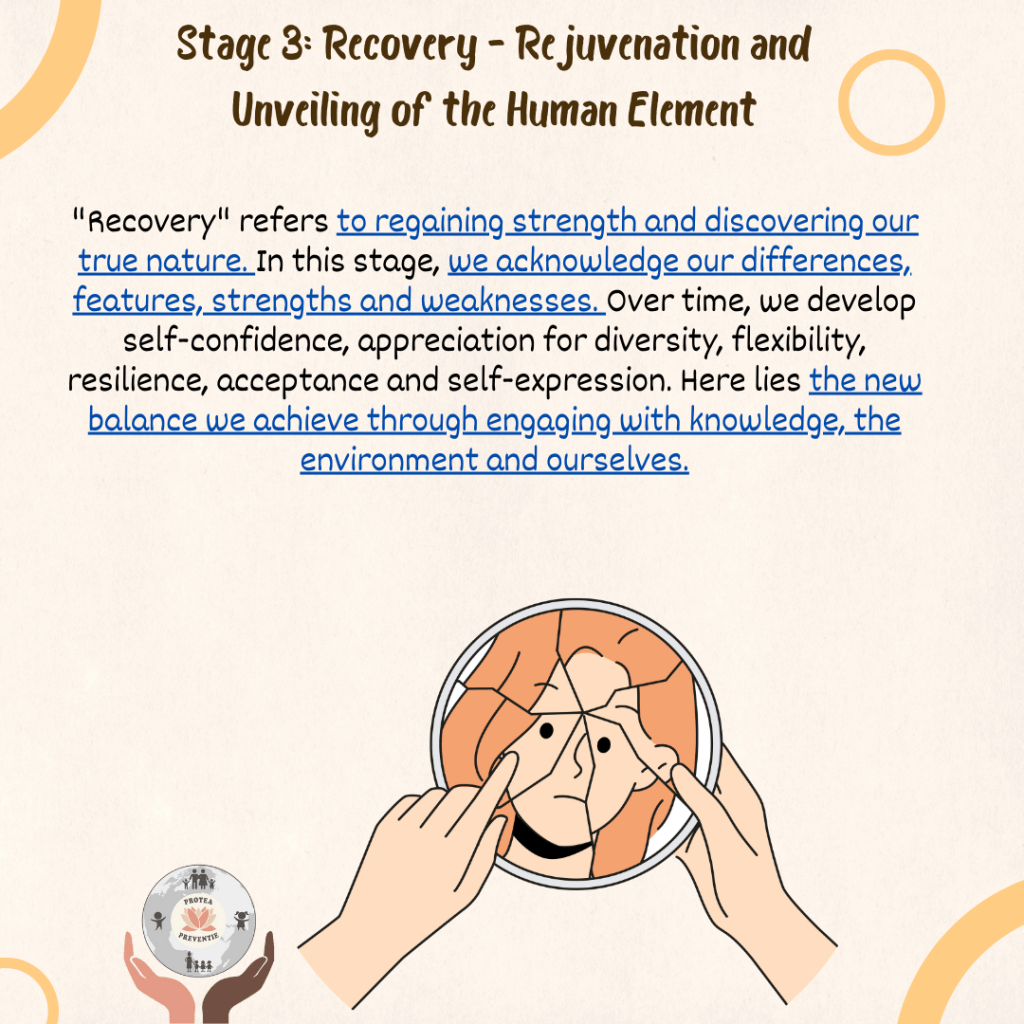
“Recovery” refers to regaining strength and discovering our true nature. In this stage, we acknowledge our differences, features, strengths and weaknesses. Over time, we develop self-confidence, appreciation for diversity, flexibility, resilience, acceptance and self-expression. Here lies the new balance we achieve through engaging with knowledge, the environment and ourselves.
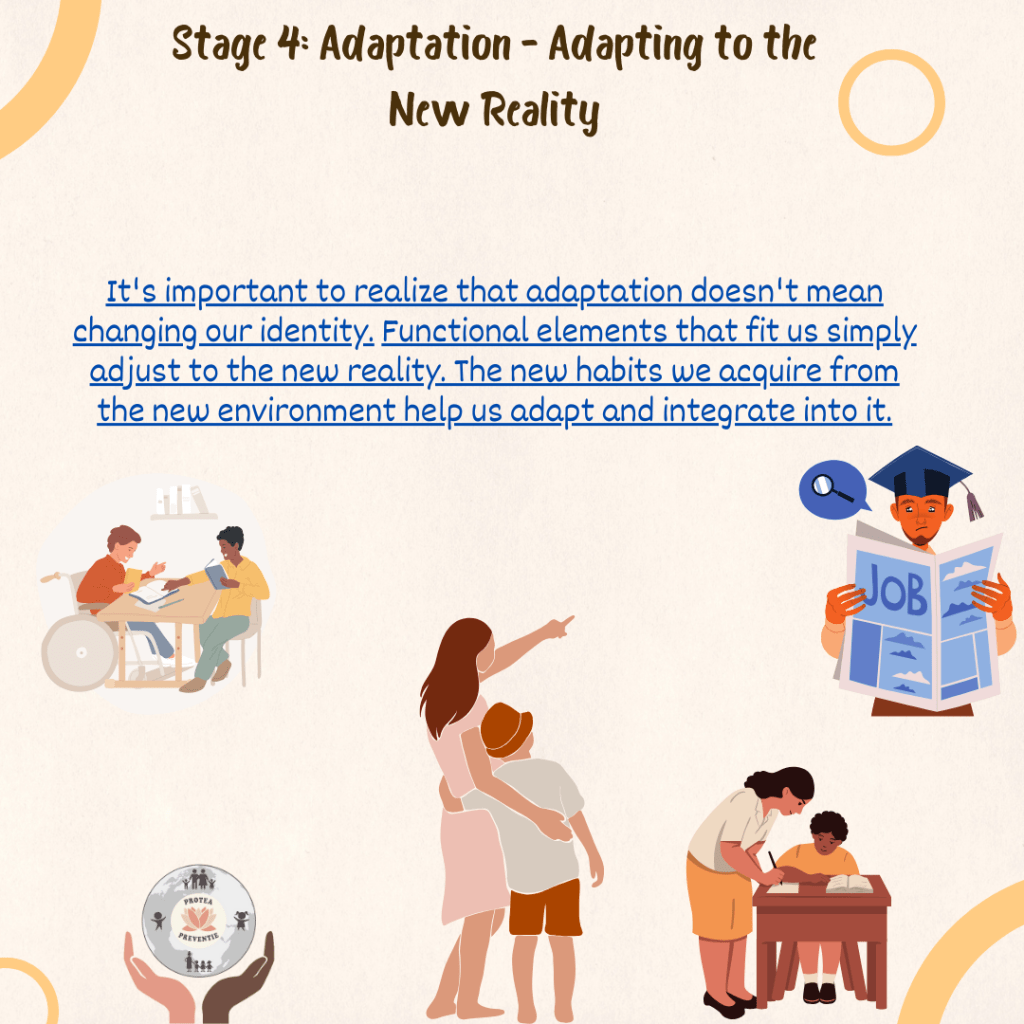
Stage 4: Adaptation – Adapting to the New Reality
It’s important to realize that adaptation doesn’t mean changing our identity. Functional elements that fit us simply adjust to the new reality. The new habits we acquire from the new environment help us adapt and integrate into it.
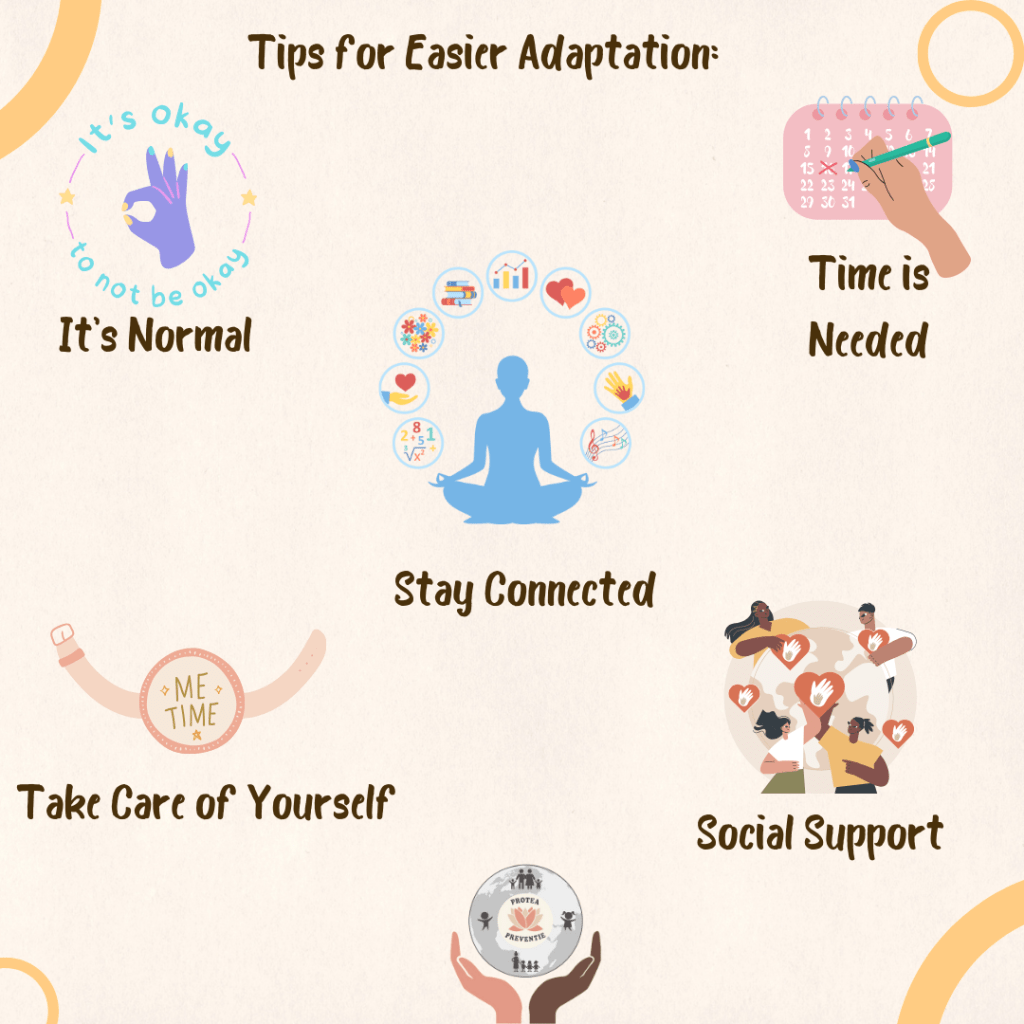
Tips for Easier Adaptation:
- It’s Normal: Recognize that change is a normal process. Unpleasant feelings are temporary and common during every life transition.
- Time is Needed: Give yourself time to work through the adaptation process. Patience is crucial.
- Stay Connected: Keep in touch with or revisit important elements of your culture, personal history or things which bring you joy, such as food, music, etc. Surround yourself with familiar objects that evoke memories.
- Take Care of Yourself: Prioritize your physical and mental health with proper nutrition, exercise and sufficient sleep.
- Social Support: Talk to others who have gone through similar experiences, communicate with your family and friends or seek help from experts.
In every case, adaptation is a journey with multiple stages. It’s the new balance we achieve through engagement with knowledge, environment and ourselves. By keeping these stages and tips in mind, we can face every change with increased confidence and resilience.


 Protea Preventie
Leave a comment